How to Play SAMAR SEQUENCE
Master the board, utilize special Jacks, and lead your team to victory.
🎯 The Objective
The objective of SAMAR SEQUENCE is to be the first player or team to score the required number of 5-in-a-row sequences before your opponents. A sequence is a straight connected line of five team chips in any direction: horizontal, vertical, or diagonal.
👥 Player Modes & Winning Conditions
| Player Count | Teams | Cards in Hand | Sequences to Win |
|---|---|---|---|
| 2 Players | 2 Teams (Blue vs Green) | 7 Cards each | 2 Sequences |
| 3 Players | 3 Teams (Blue vs Green vs Red) | 6 Cards each | 1 Sequence |
| 4 Players | 2 Teams (Seats alternate: P1+P3 vs P2+P4) | 6 Cards each | 2 Sequences |
👑 The 10x10 Board & Wild Corners
The game board consists of 100 squares (10 rows of 10):
- 96 Regular Cells: Hold every non-Jack card in the 52-card deck exactly twice (48 cards × 2 = 96 spaces).
- 4 Corner Cells: Marked with 👑 crowns. The four corners are permanent wild spaces for all players and teams! Any player can complete a 5-in-a-row sequence using a corner with only 4 team chips. Multiple teams can use the same corner simultaneously.
🃏 The Power of Jacks
There are 8 Jacks in the 104-card double deck. Jacks do not appear on the board squares—they possess special game-changing powers:
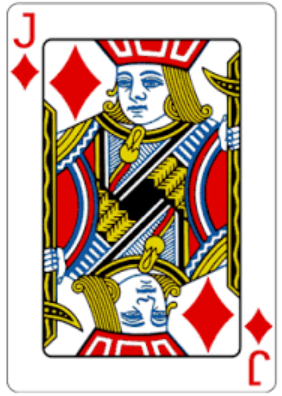
👀 Two-Eyed Jacks (♣J & ♦J)
Wild Placement
Place your team chip on any empty, non-corner space on the entire board. Use them to bridge distant chips or complete a surprise sequence!
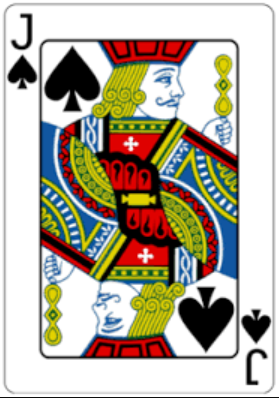
👁️ One-Eyed Jacks (♠J & ♥J)
Remove Opponent Chip
Remove one opponent chip from any board cell. Crucial restriction: You cannot remove a chip that is already locked inside a completed sequence!
📏 Sequence Line & Overlap Rules
- A completed sequence consists of 5 chips of your color in an unbroken row.
- Sharing Rule: Two sequences of the same team may share at most one chip. For instance, an intersecting horizontal and vertical sequence may share their crossing chip.
- Runs of 6: A continuous straight run of 6 chips still counts as one sequence (not two), because a second 5-chip window would share 4 chips.
- Runs of 9 and 10: A run of 9 chips sharing the middle chip yields two sequences. A run of 10 chips yields two separate sequences sharing zero chips.
- Sequence Lock: Once a sequence is formed, its chips are permanently locked and protected from One-Eyed Jack removal.
💀 The Dead Card Exchange
If both squares corresponding to a card in your hand are already covered by chips on the board, that card is considered Dead. Once during your turn, before playing a card, you can discard the dead card to the discard pile, draw a fresh replacement from the draw pile, and then take your regular turn. Jacks are never dead.